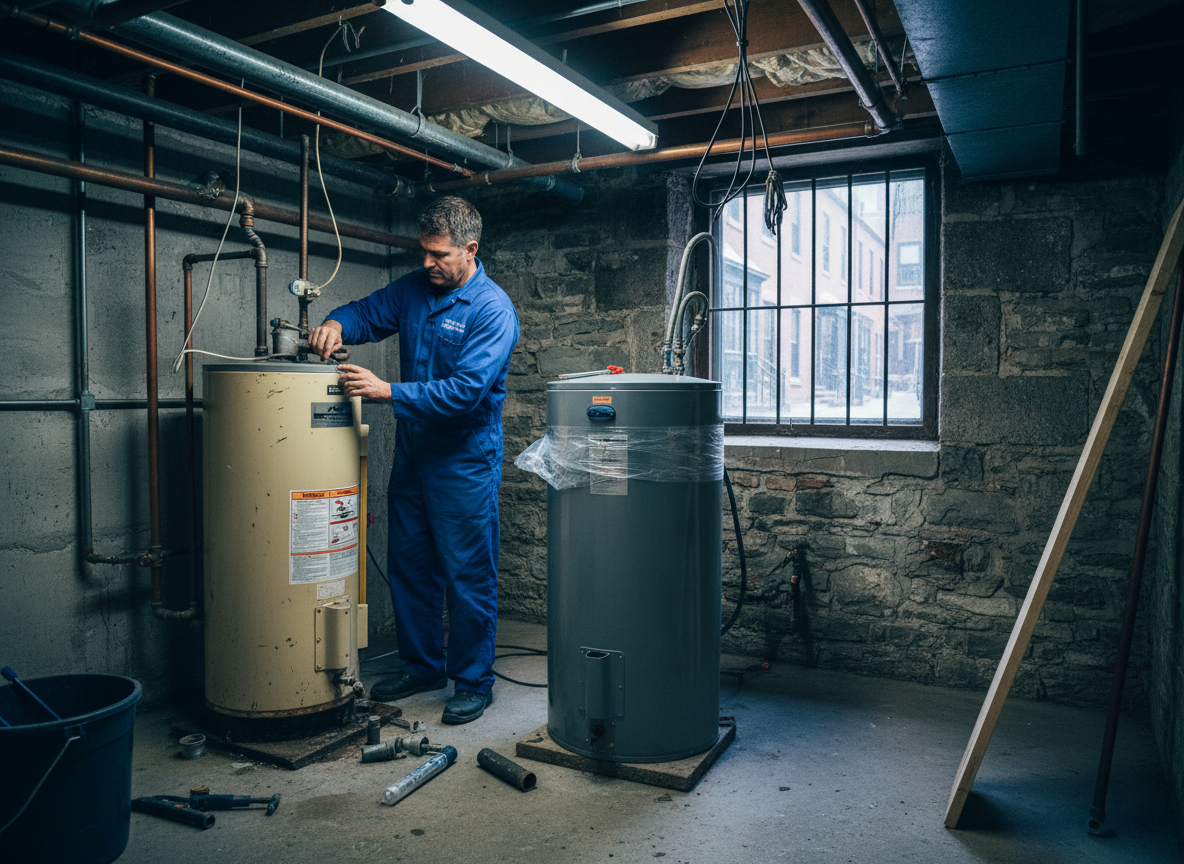
Boston's housing stock in neighborhoods like Beacon Hill and the North End often features narrow basements and outdated piping that complicate water heater swaps. Older galvanized lines common in pre-1950 buildings require careful isolation and sometimes full reruns to avoid leaks once the new unit is online. The humid continental climate moderated by the Atlantic brings sharp winter temperature drops that increase demand on heating elements and accelerate sediment buildup in tanks.
Replacement jobs in South Boston and Dorchester frequently involve electric units because many triple-deckers lack gas service. When switching to tankless models, crews must verify venting paths through brick walls and confirm electrical service can handle the higher amperage draw without panel upgrades. Suffolk County inspectors pay close attention to seismic strapping and expansion tank placement on jobs near the harbor where soil movement is more noticeable.
Homeowners in Cambridge and Brookline often request hybrid heat pump units to cut operating costs, but these require adequate airflow and condensate drainage that older utility rooms rarely provide. Proper sizing accounts for the number of bathrooms and simultaneous use patterns typical in multi-unit buildings rather than generic manufacturer charts. Access limitations in tight Charlestown alleys can add time for equipment staging before any demolition begins.
Technician insight
In Boston the thing that catches most people out with water heater replacement is the condition of the original galvanized supply lines in pre-war buildings around Beacon Hill and the North End. Once you open the wall you often find corrosion that forces an unplanned reroute, and winter ground temperatures make the job slower because pipes stay cold longer during the drain-down.
Beacon Hill row house swap
The existing 50-gallon electric tank in a tight basement had failed and was leaking onto the floor. Inspection showed corroded copper branches feeding the kitchen and baths. We replaced the heater with a new 50-gallon electric model, isolated and replaced the worst sections of line, and restored hot water the same afternoon without disturbing the finished floors above.
Water Heater Replacement Services We Offer
✓Tankless Water Heater Installation
Direct replacement of tank-style units with tankless models sized for multi-bath homes in Back Bay and South End buildings.
✓Electric Water Heater Replacement
Full swap of electric tanks in triple-deckers and row houses where gas lines are absent or restricted.
✓Gas Water Heater Replacement
Removal and installation of gas-fired units with proper venting updates for historic Beacon Hill and North End properties.
✓Hybrid Heat Pump Water Heater Installation
Upgrade to energy-efficient hybrid units that fit utility spaces in Cambridge and Brookline residences.
✓Commercial Water Heater Replacement
Larger capacity replacements for small businesses and multi-unit buildings in Jamaica Plain and Roxbury.
Water Heater Replacement Cost in Massachusetts
| Service | Typical Range | What Affects It |
|---|---|---|
| Standard 40-50 gallon electric replacement | $900–$1,600 | Higher end when access is tight or old piping must be updated |
| Gas tank replacement | $1,100–$1,900 | Includes venting work common in older South End homes |
| Tankless conversion | $2,200–$3,800 | Varies with gas line sizing and electrical upgrades |
| Hybrid heat pump unit | $1,800–$2,900 | Reflects condensate and airflow modifications |
Ranges are typical for Massachusetts and confirmed with an exact written quote before any work starts.
How it works
- 1
Site Assessment
Technician inspects existing unit location, piping condition, and access routes in the specific Boston neighborhood.
- 2
Unit Selection And Quote
Review fuel type, capacity needs, and any venting or electrical constraints before providing a written scope.
- 3
Old Unit Removal
Shut off utilities, drain the tank, disconnect lines, and safely extract the old heater without damaging surrounding finishes.
- 4
New Installation And Testing
Set the replacement, reconnect with code-compliant fittings, restore service, and verify temperature and pressure performance.
Pricing
Upfront written quotes based on unit type, access difficulty, and any required piping or venting changes.