2026-10-12 ·
Why Boston Winters Trigger More Water Heater Repair Calls
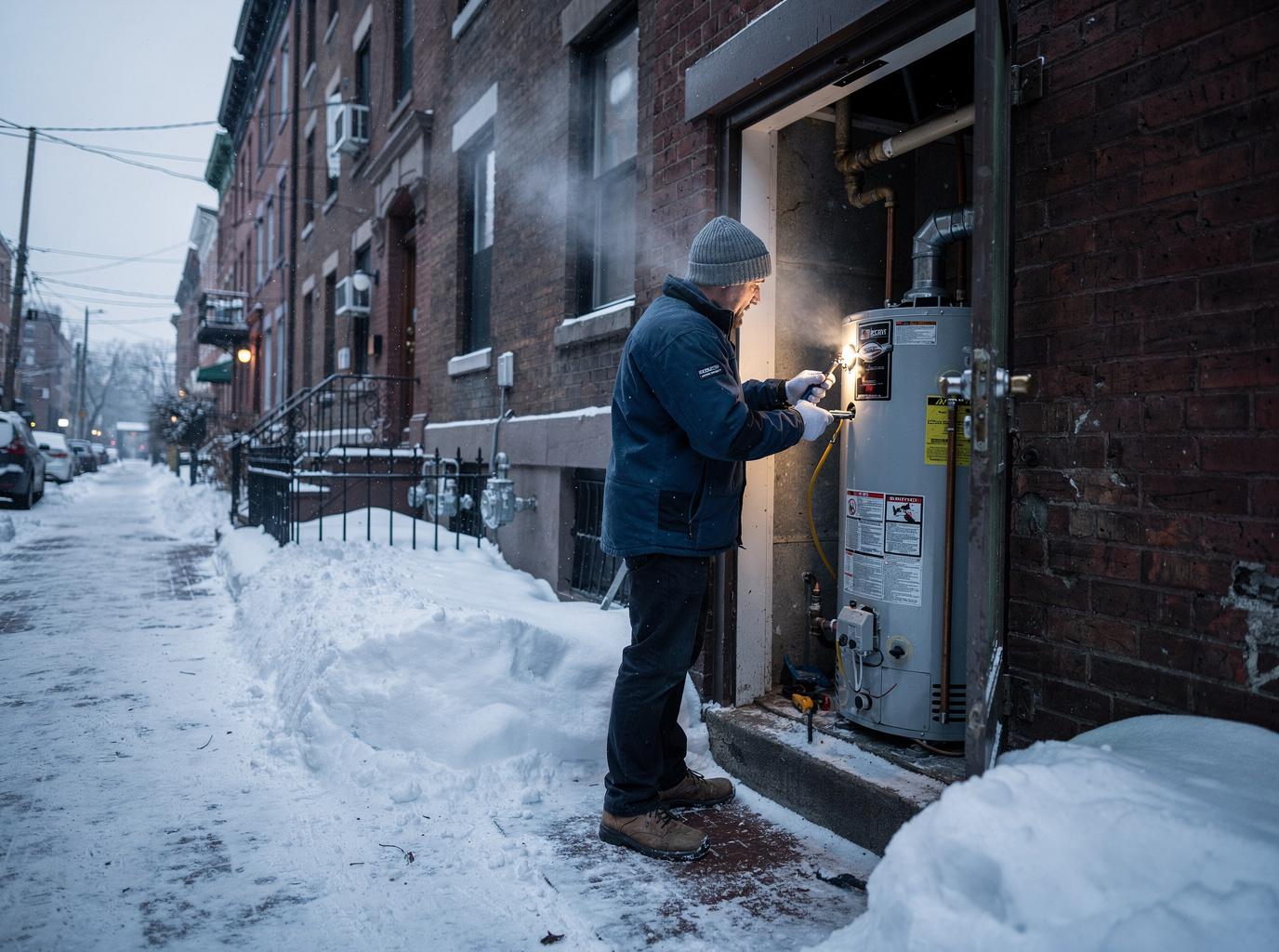
Boston winters trigger more water heater repair calls because freezing temperatures and higher hot water demand accelerate wear on tanks and components in older housing stock throughout Suffolk County. Homes in Back Bay and Beacon Hill often feature aging plumbing that expands and contracts with temperature swings, while the humid continental climate moderated by the Atlantic Ocean brings prolonged cold periods that chill incoming water lines.
Cold Snaps Stress Older Tanks and Pipes
In neighborhoods such as Beacon Hill and the North End, many buildings date back decades with original or early replacement water heaters that already carry sediment layers. When overnight lows drop sharply, inlet water arrives colder, forcing units to work harder and raising internal pressure. This combination often leads to leaks at connections or weakened anode rods. Residents in Cambridge and Somerville report similar patterns during extended cold fronts, where the ground chill affects basement installations common in triple-deckers. Technicians see more failed thermostats and heating elements after these events because the sudden load reveals existing corrosion. Checking units before December helps catch issues before they interrupt service during the coldest stretches.
Higher Demand Meets Limited Capacity
Winter routines in South Boston and Dorchester push water heater systems beyond normal summer loads. Families increase showers and laundry as temperatures stay low, and homes near Boston Harbor feel extra wind chill that makes hot water feel essential. In Allston and Brighton, student housing and multi-unit buildings experience simultaneous draws that drop temperatures faster than units can recover. This sustained use shortens element life and stresses pressure relief valves. The Atlantic influence keeps humidity high, so condensation forms on cooler tanks and promotes rust at seams. Scheduling a flush before winter arrives prevents mineral buildup from turning minor problems into emergency shutdowns when demand peaks.
Maintenance Steps That Reduce Winter Failures
Homeowners in Jamaica Plain and Roxbury can lower repair frequency by following a few targeted steps. First, drain the tank to remove sediment that insulates heating surfaces and forces longer run times. Second, inspect the temperature and pressure relief valve for proper operation, since cold weather pressure spikes test this safety feature most. Third, verify insulation on exposed pipes near exterior walls, a common layout in Charlestown row houses. These actions keep units running through the season without unexpected breakdowns. For guidance on the flushing process, see the detailed steps in our guide on how to flush a water heater tank in Boston homes.
When Replacement Becomes the Practical Choice
Some units in East Boston and the South End reach the point where repeated winter repairs no longer make sense. Factors include visible corrosion on the tank exterior, inconsistent temperatures despite recent service, or age that aligns with heavy seasonal use. In these cases, switching to a properly sized model prevents repeated service visits during the busiest months. Our team at Water Heaters Pros, based in Boston and open Mon–Fri 8am–6pm and Sat 9am–2pm, evaluates existing setups in Suffolk County homes and nearby cities like Brookline before recommending options. For cost considerations specific to local conditions, review our article on what affects water heater repair costs in Boston. Planning ahead avoids the rush that follows the first hard freeze.